


Plantation Shutters in Lexington, KY: A Buyer's Guide

September 10, 2026

Plantation shutters are one of the most requested window treatments among Lexington, KY homeowners, and for good reason: they add durability, insulation value, and resale appeal in a way roller shades and curtains do not. If you are considering plantation shutters in Lexington, KY, this guide covers what to look for, how material choice affects performance in Central Kentucky's climate, and what to expect on cost and installation. Perspectives Paint and Design Center is the largest Graber Dealer in Central Kentucky and has helped Lexington homeowners spec and install window treatments for over 40 years.


What Plantation Shutters Actually Are


Plantation shutters are interior shutters mounted to the window frame with wide, horizontal louvers (typically 2.5 to 4.5 inches) that tilt open and closed with a tilt rod or hidden mechanism. They differ from traditional shutters (thinner louvers, more decorative) and from exterior shutters (mounted outside the window). They also differ from blinds and shades in that they are a permanent installation, not a fabric or slat product you replace every few years.


The name comes from Southern plantation homes where wide louvers helped move air through the house before central cooling existed. That functional advantage still matters: plantation shutters give you fine control over light and privacy in a way roller shades and curtains cannot match.


Choosing the Right Material for Lexington, KY


Material is the single biggest decision on a plantation shutter purchase, and Lexington's climate matters here. Kentucky summers are humid; winters are dry with steep temperature swings. Rooms exposed to south-facing sun get significant UV load year-round. Here is how the main material options actually perform:


  • Basswood. The traditional premium hardwood option. Straight grain, stable, holds paint and stain well. Best for interior rooms without high humidity exposure. Higher cost than composite. Beautiful appearance on stained finishes.
  • Poplar. A lower-cost hardwood option. Performs well when painted. Not as stable as basswood in humid environments (Lexington summers).
  • Engineered wood (composite). A hardwood core with a synthetic exterior. More stable than solid wood in humid or high-moisture rooms (bathrooms, kitchens, laundry). Slightly less premium in appearance than basswood but more consistent in performance.
  • Vinyl or PVC. The most humidity-resistant option. Best for bathrooms, mudrooms, and rooms with heavy sun exposure. Lower cost. Less appearance flexibility (finishes are limited to what the manufacturer offers).


For most Lexington homes, we recommend basswood in main living areas and either engineered wood or vinyl in bathrooms and kitchens. Mixing materials across the house is common and does not affect appearance if the finish color matches.


Cost Expectations for Plantation Shutters in Lexington, KY


Plantation shutter pricing varies by material, louver size, window size, and finish complexity. As a general benchmark, custom plantation shutters run several times the cost of stock blinds or shades. That price gets you a product that lasts decades rather than years, adds resale value to the home, and is a permanent fixture rather than a replaceable soft good.


Cost drivers to keep in mind:


  • Window count and window size. Larger windows and more windows drive material cost.
  • Material choice. Basswood is the highest of the four options; vinyl is the lowest.
  • Louver size. Wider louvers (4.5 inch) let in more light and view when open; narrower (2.5 inch) offer more privacy control. Cost is similar.
  • Frame style. L-frame, deco frame, and specialty inserts (arched windows, angled tops) affect fabrication cost.
  • Finish complexity. Standard paint or stain colors are baseline. Custom colors or specialty finishes add to the cost.


We provide free in-store consultations in Fayette County. In-home consultations run $100 for one hour; additional in-store visits are included at no charge. Free on-site measurements inside Fayette County; outside Fayette County the measurement is quoted based on location.


Motorized and Custom Options


For Lexington homeowners who want motorized operation, plantation shutters can be paired with hidden tilt-rod mechanisms controlled by remote, smartphone app, or wand. Motorization is worth considering for high windows (above stairwells or two-story great rooms) where manual operation is awkward, and for large window walls where opening every panel individually becomes a daily chore.


Perspectives Paint and Design Center is a residential window treatment Lexington KY provider serving homeowners across Fayette County, Woodford County, Jessamine County, and Scott County. Beyond shutters, our custom window treatment store Lexington KY offering includes motorized shades, plantation shutters, cellular shades, and drapery. We work with Hunter Douglas, Graber, Comfortex, and Vitale.


Explore our full window treatment supplies collection and interior design projects for real Lexington installations.


What Installation Actually Looks Like


Installation happens in three phases: measurement, fabrication, and installation. Every phase matters, and skipping any of them produces gaps, misalignment, or an off-square finish that plantation shutters will show more than blinds ever would.


  1. Measurement. On-site by a professional with the tools to check for out-of-square windows, uneven jambs, and depth constraints. Standard on all Perspectives Paint and Design Center installations inside Fayette County.
  2. Fabrication. Custom manufacturing by the manufacturer, usually four to eight weeks depending on material, finish, and current lead times.
  3. Installation. In-home installation by our team, with adjustment on the spot to correct for any final fit issues.


We guarantee our installation. If a shutter does not sit right after final install, we fix it.


Frequently Asked Questions About Plantation Shutters in Lexington, KY

  • How long do plantation shutters last?

    Properly specified and installed plantation shutters last decades. Basswood and engineered wood options typically outlast the finish on the surrounding trim.

  • Do plantation shutters add value to a Lexington home at resale?

    Real estate agents in the Lexington market consistently note plantation shutters as a resale-positive feature because they stay with the house and buyers see them as an upgrade over blinds.

  • Can plantation shutters help with energy costs?

    The airspace between the shutter and the window pane provides an insulation effect. Not the same as double-pane windows, but noticeable, particularly on south- and west-facing exposures.

  • What is the difference between plantation shutters and traditional shutters?

    Louver width. Plantation shutters use wider louvers (2.5 to 4.5 inch) for a modern, cleaner look. Traditional shutters use narrower louvers and read more Colonial in style.

  • How do I schedule a consultation for plantation shutters in Lexington, KY?

    Call (859) 277-0521 or use our contact page to book a free in-store consultation or an in-home consultation.

Ready to Talk Plantation Shutters?


If you are considering plantation shutters in Lexington, KY, come by our Design Center on Regency Road or call (859) 277-0521 to schedule a consultation. We will walk you through material, louver, frame, and finish choices with real samples in hand, and our design team will spec exactly what your windows need.

Equipment for painting an interior room.
July 9, 2026
Get pro-grade painting supplies in Lexington, KY, from Perspectives Inc. Access specialty primers, bulk coatings & expert guidance. Call today!
Close-up of a woman choosing a paint from a paint supply.
June 1, 2026
Find the right paint supply in Lexington, KY at Perspectives Paint and Design Center. We offer premium painting supplies and formulas. Call (859) 277-0521!
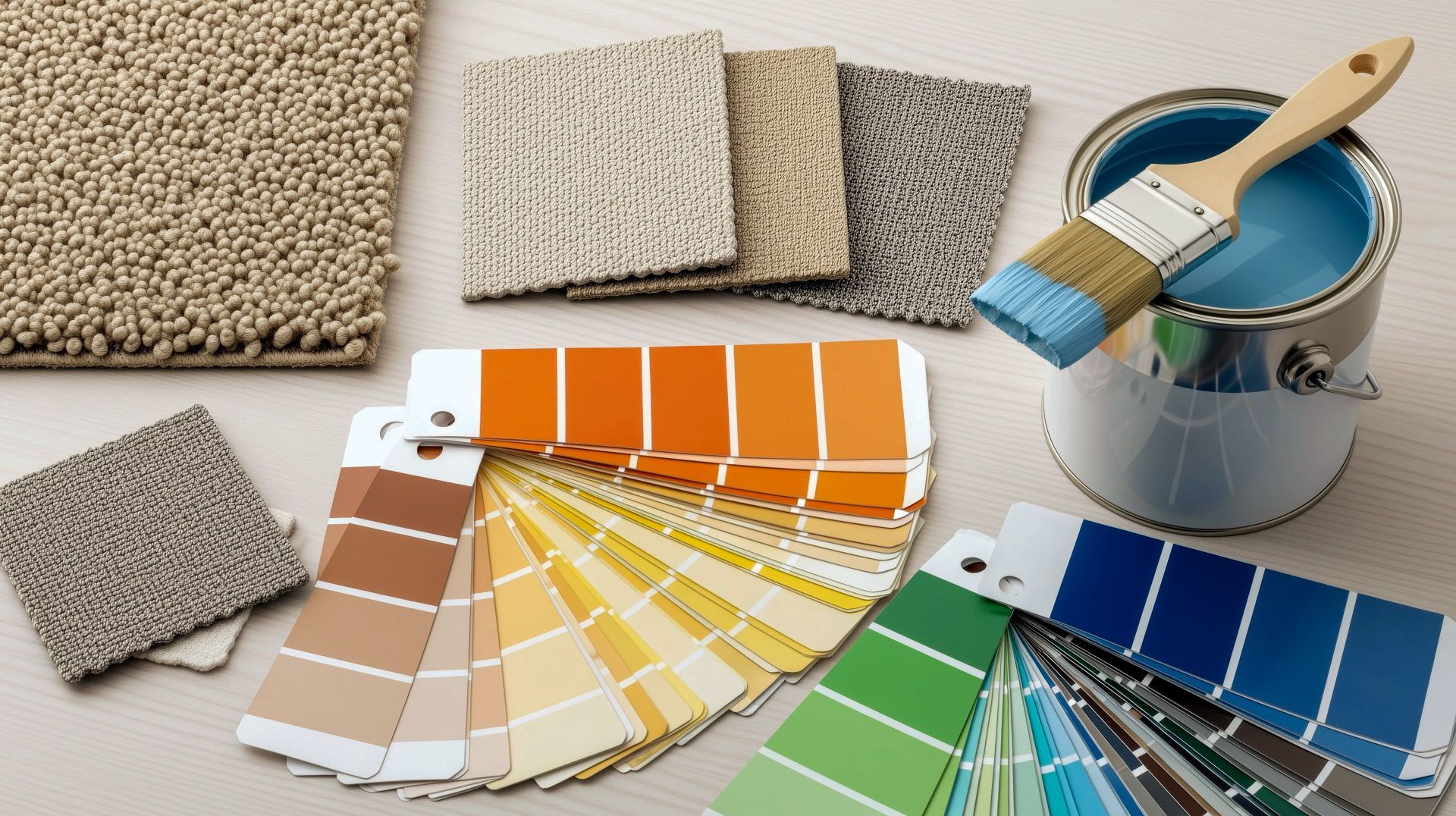
Interior design flat lay with paint color swatches, fabric samples, and other painting supplies.
March 20, 2026
Explore premium painting supplies for Central Kentucky with Perspectives Inc. Call (859) 277 0521 for expert advice and professional-grade solutions today.
Woman reaching for a paint can on a shelf in a hardware store.
November 26, 2025
Find premium painting supplies in Central Kentucky, at Perspectives. Contact 859-277-0521 for expert guidance and quality products for every project.
Paintbrush dipped in blue paint, resting on an open can against a background of white, orange, yellow, and green squares.
September 26, 2025
Discover quality painting supplies for Central Kentucky at Perspectives Paint and Design Center. Call 859-277-0521 for expert guidance today!
Person painting with a roller. They're wearing purple pants and a blue shirt.
August 21, 2025
Choosing the correct roller cover for your specific project. Don’t just roll over and buy the cheapest roller cover on the shelf! Start with knowing your desired texture as well as the sheen of paint you will be using. Next, you’ll need to decide on a knit, woven, microfiber or foam roller cover. Knit rollers have a looped construction that holds more paint and are better suited for textured surfaces and using flat or eggshell paint finishes leaving some texture on the surface. Woven rollers have a tighter weave that provides a smoother finish, don’t hold as much paint but are more shed resistant. Microfiber rollers hold more paint and apply paint smoothly, has reduced spatter and lint. They are great for many finishes and are easy to clean and reuse. ** We recommend microfiber roller covers for consistent control and smooth finishing. Foam rollers create a very smooth finish and are recommended for cabinet and furniture surfaces. Next characteristic you want to focus on is the nap height, which is the length of the fibers that extend from the backing and carry the paint to the wall. These are some general guidelines to help you. Shorter nap (3/16” or 1/4″) are for smooth surfaces such as new drywall, choose these to evenly apply the paint and maintain a smooth finish. Because a shorter nap picks up less paint, it is common for some painters to use a longer nap for increased production. While this can help speed up your painting project, it is important to note that higher naps may leave a textured look on a smooth surface. Always remember to select a nap height that will provide you with your desired finish regardless of the paint pick up and release capabilities. Medium nap (3/8” to 1/2”) are the most commonly used nap. Used correctly, they can be used on smooth to medium textured surfaces. These naps combine production speed with the ability to leave a smooth finish that will speed up a project while giving very good finish results. Medium naps come in a wide variety of fiber types, sizes and naps, giving the user the option to choose just the right combination of roller cover size, fabric and nap to complete their job. Higher nap (3/4” to 1 ½”) are for rough surfaces so the long fibers can reach into the valleys of the texture. Higher nap heights are great for textured plaster or stucco, siding, decks, concrete block, brick, and corrugated metal. Long nap heights offer great paint pick up and release, which makes getting into all the cracks and crevices of the surface easier. A higher nap will provide better coverage on a highly textured surface.
Person in overalls holding up a purple rug.
July 14, 2025
1. Prepare the Wall: Clean the walls thoroughly, remove any existing wallpaper, and repair any damage. Don’t use Dawn or any other house soap because it will leave glycerin build up on the wall. Never apply paper to an unpainted surface like drywall. APPLY sizing to the wall, to ensure proper adhesion and easier removal. If you are hanging light-colored wallpaper over a dark color or a dark color over a lighter color TINT your sizing to prevent the old color showing through. Read the directions on your sizing for specific drying times. 2. Measure and Cut: Before starting make sure that the run numbers on all rolls are the same. Cut one piece to start. Measure the wall height and add a few extra inches to the top and bottom of each strip. Cut the wallpaper strip according to your measurements. For additional strips, make sure to allow for pattern match. Before cutting the next strip, hold the paper up to the strip on the wall to see where the pattern match is and determine how long to cut the next strip. If you are working with multiple rolls, you can sometimes reduce waste by cutting the next strip from another roll. Since you can only return full, uncut rolls, make sure that you will need paper from another roll before cutting it. 3. Apply Paste (if needed): Read your papers’ directions. Some call for applying the paste to the paper and others are “paste the wall”. 4. Book the Wallpaper if required by the instructions by folding the pasted strip in on itself (booking) for a few minutes to allow the paste to activate. Follow the instructions for the correct time to allow the paper to book and fold the paper loosely; don’t crease the paper! 5. Hang the Wallpaper: Start with a straight line. Use a plumb line, chalk line or a laser level line. Align the first strip at the top of the wall, allowing it to overlap a little at the top and bottom, then smooth it onto the wall from top to bottom, working out any air bubbles with a smoother and a wet sponge. 6. Trim the overlap: Trim the excess paper at the ceiling and baseboard. Use a straight edge and a very sharp cutter. Ensure seams are properly aligned and pressed firmly to the wall and use gently a roller tool if appropriate. Be careful not to press too hard when smoothing so you don’t squeeze all the paste out, especially at seams. 7. Finishing: Clean any excess paste from the wall using clean clear water. Don’t hang anything on your new wallpaper including electrical outlet covers, paintings, shelves and other fixtures for at least 24 hours.. Tips for Success: Don't stretch the paper: Avoid pulling or stretching the wallpaper while hanging, as this can distort the pattern and cause seams to separate when the paper dries. Work with a partner: Having someone to help guide the paper and hold edges can make the process smoother, especially with larger patterns. Practice with a small section: If you're new to wallpapering, practice on a hidden area of the wall, like behind a door or with a small piece of wallpaper to get the “hang” of the process.
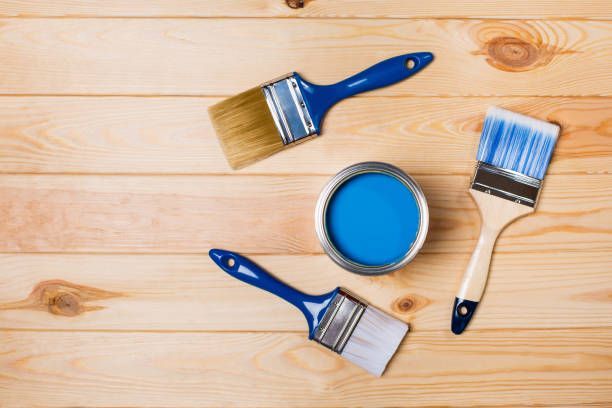
Paintbrushes and blue paint can on a wooden surface.
May 6, 2025
Read about essential painting supplies in Central Kentucky, that professionals rely on with Perspectives Inc. Click here and find out more!
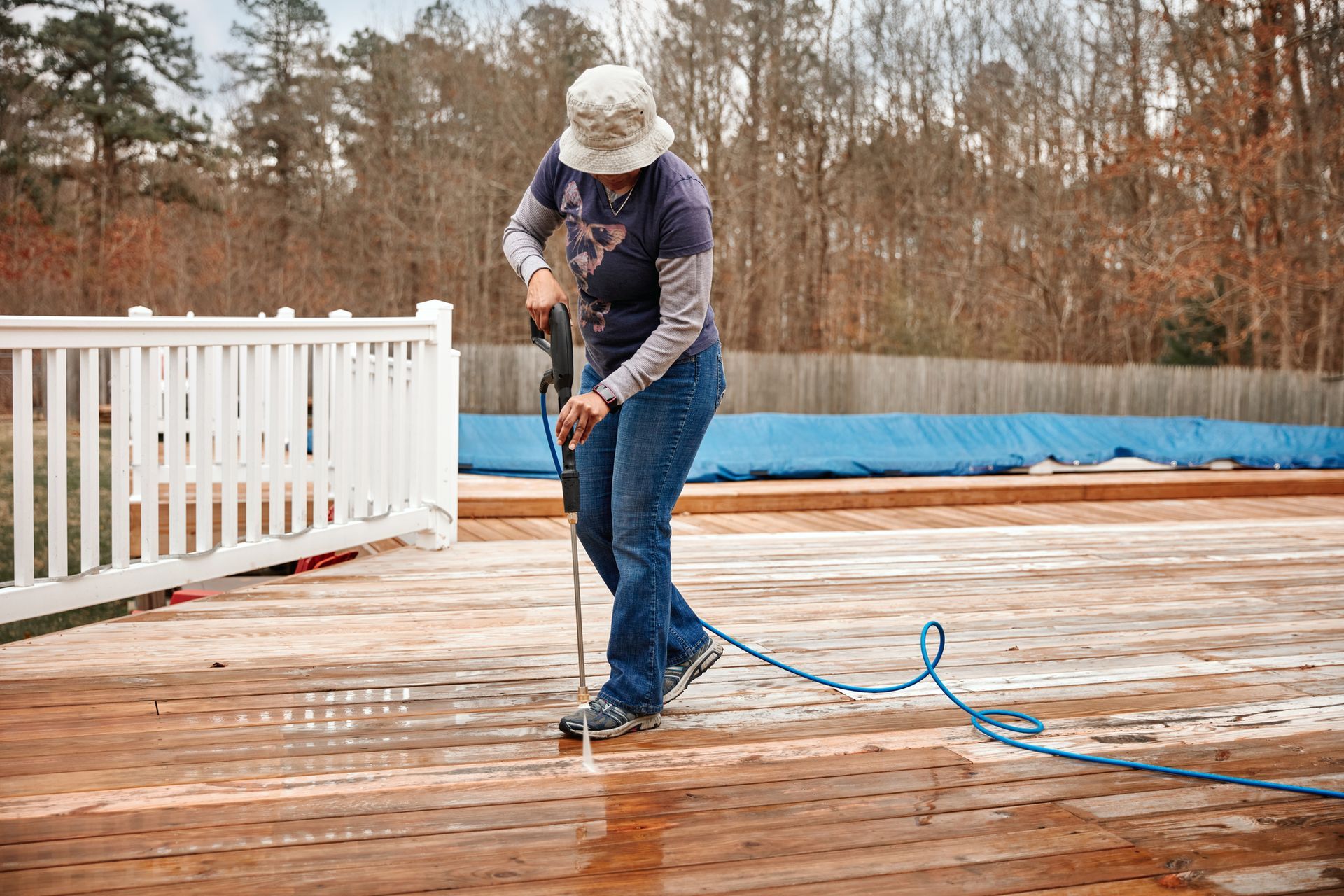
Person power washing a wooden deck outdoors.
March 29, 2025
1. Move all furniture – tables, chairs, grills, planters, etc. off deck.
Woman wearing an apron, holding it with her hands; text box under reads
By Jason Taylor August 28, 2024
Discover the right sandpaper for your project with our comprehensive grit guide. From coarse to ultra-fine, choose the best sandpaper for your sanding needs.
More Posts